
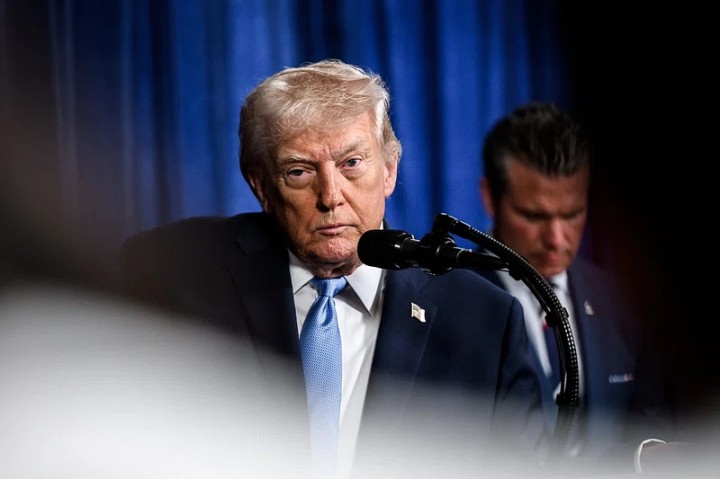
President Donald Trump has voiced his disapproval of Israeli airstrikes targeting Beirut’s southern suburbs, cautioning that such military actions could jeopardize vital diplomatic efforts aimed at achieving a peace agreement in the Middle East. In his statement, Trump urged all involved parties to demonstrate restraint and called for an immediate cessation of hostilities in Lebanon. He emphasized the need for Israel to halt its attacks within Lebanese borders and for Hezbollah and other groups to refrain from further strikes against Israel.
Highlighting the precarious timing of the Israeli strikes on Beirut, Trump pointed out that they coincided with critical negotiations aimed at establishing a significant regional peace framework. He conveyed his hope that diplomatic advancements could lead to increased stability and a long-term reduction in tensions throughout the region.
Israel, justifying its actions, reported that the airstrikes were a response to projectiles launched by Hezbollah towards Israeli territory earlier the same day. Israeli authorities claimed the military response was aimed at a Hezbollah command facility in Beirut’s southern suburbs, asserting their right to defend their nation and its citizens. Israel has maintained that it will not tolerate attacks on its soil, holding Hezbollah responsible for the escalation of violence.
The recent exchanges have sparked fears that renewed conflict in Lebanon could hinder broader diplomatic initiatives involving regional powers. International observers are concerned that continued hostilities might undermine efforts to lessen tensions and secure broader security arrangements in the Middle East. Despite these setbacks, diplomatic efforts continue, with several nations advocating for dialogue and restraint. Analysts emphasize that maintaining calm across the region is crucial for sustaining progress towards regional stability and preventing a broader conflict.
The latest developments underscore the fragile situation in the region, where ongoing military actions have a significant impact on high-level diplomatic negotiations. As efforts to achieve peace continue, the delicate balance between military responses and diplomatic dialogue remains a critical factor in determining the future of regional stability.