
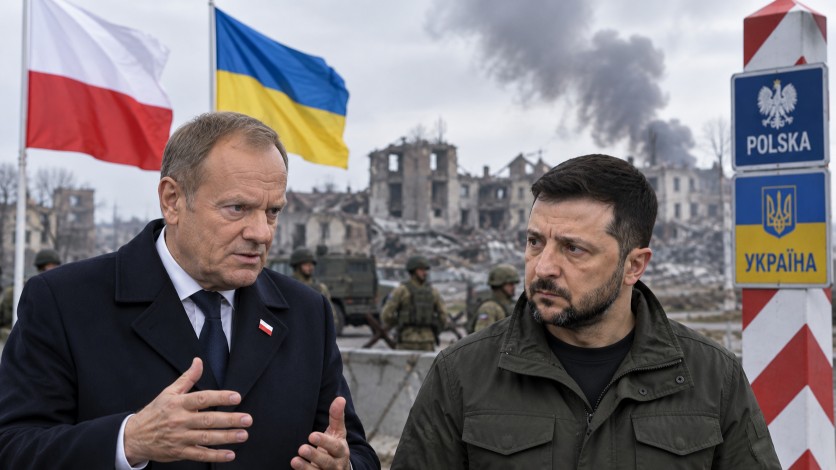
Poland and Ukraine have strongly criticized recent Russian military strikes near the Polish border, describing them as a dangerous escalation that could pose a growing threat to European security. A passenger train traveling between Kyiv and Warsaw was hit approximately two kilometers from the border with Poland, though fortunately, there were no casualties reported. Notably, the attack occurred around the time several high-profile foreign figures, including former British Prime Minister Boris Johnson and former CIA Director David Petraeus, were at a nearby border station.
Ukrainian President Volodymyr Zelenskyy accused Russia of intentionally targeting the train and cautioned that such actions risk drawing the conflict closer to Europe. In response to the incident, Polish Prime Minister Donald Tusk convened an emergency meeting, expressing concerns that Russia might intensify its military operations in the weeks ahead. Tusk emphasized that Poland cannot dismiss the possibility of the conflict affecting its territory.
Russia, on the other hand, justified its actions by stating it aimed at railway infrastructure used for transporting military equipment from European nations. Polish Foreign Minister Radoslaw Sikorski labeled the attack a severe escalation and called on Ukraine’s allies to bolster their support. Ukrainian Foreign Minister Andriy Sybiha echoed these sentiments, warning that Russian aggression poses increasing risks to European security.
The strikes come amid ongoing heavy clashes between Russia and Ukraine, with reports of casualties in Kramatorsk and Odesa, the latter including children among the victims. While these hostilities continue, diplomatic efforts remain uncertain. The Kremlin mentioned the possibility of resuming talks involving Russia, Ukraine, and the United States in October, though past negotiations have yielded little progress.
Despite the tension, President Zelenskyy has shown willingness to meet Russian President Vladimir Putin at the G20 summit in Miami in December. However, Moscow dismissed this proposal, reiterating its stance that any such meeting should occur in Russia.