
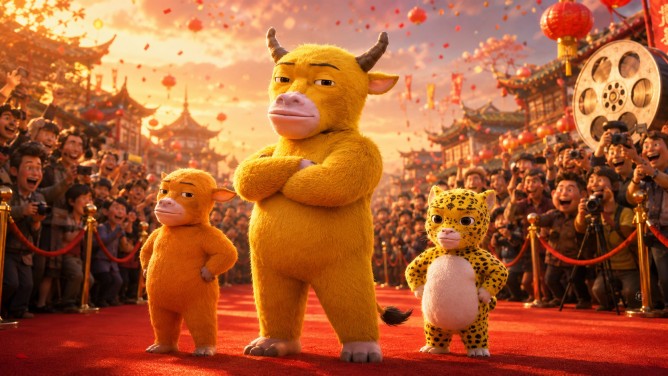
A low-budget Chinese animated film titled Niu Lai, or The Cow is Coming, has unexpectedly turned into a box-office hit, captivating audiences with its “so bad it’s good” appeal. This 86-minute movie, which debuted on August 5 with minimal fanfare, chronicles the surreal journey of a newborn calf and a skylark through an abstract dreamscape. Initially overlooked, the film’s fortunes shifted dramatically thanks to social media, where users began buzzing about its peculiar animation and unconventional storytelling.
During its first ten days in theaters, Niu Lai struggled, earning only about 7,700 yuan with fewer than 300 ticket sales throughout China. However, the film gained traction after online discussions highlighted its unusual production quality, sparking curiosity and driving more viewers to cinemas. This viral attention propelled Niu Lai to earn over 14.9 million yuan, marking it as one of the year’s surprise box-office performers in China.
The film’s unique production story has also captured public interest. Created by just two individuals, Xin Yumeng and Sun Lifang, Niu Lai was a five-year endeavor during which the duo managed writing, directing, voice acting, and overall production duties. Its handmade aesthetic offers a stark contrast to the polished animation of major releases like Ne Zha 2, resonating with some viewers who appreciate a more artisanal touch amid the rise of artificial intelligence in filmmaking.
Despite its success, Niu Lai has sparked debate among audiences. While some appreciate its distinctive approach and embrace of grassroots creativity, others criticize the attention given to what they perceive as subpar filmmaking. They argue that such support inadvertently undermines more ambitious cinematic projects by rewarding lower production standards.
Regardless of the mixed reactions, Niu Lai’s journey from obscurity to box-office triumph underscores the powerful role of social media and audience curiosity in reshaping a film’s destiny. Without substantial marketing efforts, the film’s ascent highlights how digital discussions can elevate an overlooked project into a cultural phenomenon.