
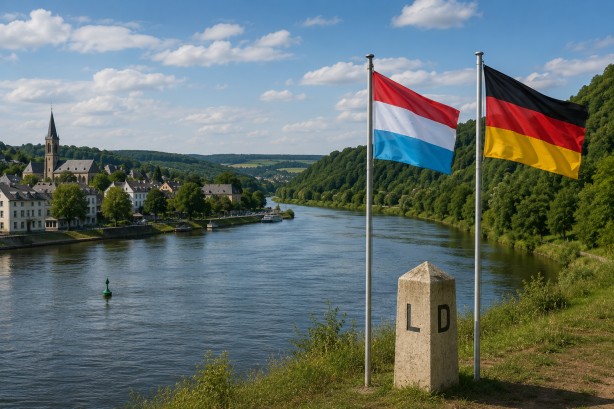
Luxembourg and Germany share a distinctive European border arrangement, where the Moselle, Sauer, and Our rivers are governed collaboratively rather than divided by a traditional boundary line. This unique setup, termed the German-Luxembourgish condominium, places these waterways, along with their islands and certain bridges, under mutual sovereignty. The origin of this unconventional border dates back to the Congress of Vienna in 1815, which aimed to redefine European borders after the Napoleonic Wars.
According to Article 25 of the Final Act from the Congress of Vienna, these rivers were established under joint ownership, rather than being split along a typical median line. This arrangement was further solidified by treaties signed in Aachen in 1816 between Prussia and the Netherlands, the latter of which ruled Luxembourg at the time. As Luxembourg gained independence and Prussia evolved into part of the German Empire, the rights defined in these 19th-century agreements persisted, shaping the modern border arrangement between Germany and Luxembourg.
While the status of bridges crossing these shared rivers was ambiguous for over a century, the canalisation of the Moselle prompted negotiations in 1979 to clarify this issue. This culminated in a border treaty signed in 1984, which officially placed bridges and footbridges within the jointly governed territory. Today, the condominium operates under a system of concurrent jurisdiction, allowing both German and Luxembourgish laws to apply, with bilateral agreements smoothing over potential legal conflicts.
Law enforcement from both nations is empowered to operate within the shared territory, conducting joint patrols and intervening when offences occur on shared rivers or bridges. The jurisdiction for subsequent legal proceedings is determined by factors such as the individuals involved and the circumstances surrounding the offence. This shared sovereignty remains an exceptional example in Europe, creating a border that functions differently from the conventional boundaries that typically separate countries.