
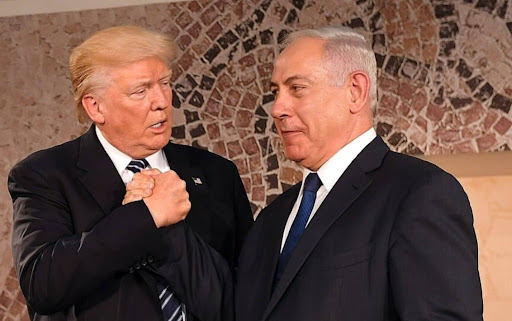
US President Donald Trump’s public acknowledgment that he had warned Israeli Prime Minister Benjamin Netanyahu against the South Pars gas field strike was unusual enough to invite scrutiny of its motivations. Was it spontaneous frustration — a president venting about an ally who had ignored his advice? Was it calculated diplomacy — a message to Gulf partners and global observers that America had not endorsed the escalation? Or was it something else — a subtle signal to Netanyahu about the limits of what Washington will absorb, delivered publicly to give it weight that private communications had failed to achieve?
The context suggests elements of all three. The Oval Office setting — a bilateral meeting with a visiting head of government — was not the typical venue for managing alliance friction. Trump’s tone was measured rather than angry, suggesting deliberate framing rather than uncontrolled venting. The audience — Japan’s Prime Minister, international media, Gulf states, and global observers — was exactly the audience that would benefit most from knowing the United States had opposed the escalation.
The calculated diplomacy interpretation is strengthened by the timing and the consequences. Gulf states were applying significant pressure on Washington over the energy price spike and regional retaliation triggered by the South Pars strike. Trump’s public acknowledgment of his prior objection gave him a response to that pressure — evidence that he had tried to prevent the escalation rather than sponsoring it. The disclosure served American diplomatic interests with Gulf partners at a moment when those interests needed serving.
The signal-to-Netanyahu interpretation is also plausible. Prior private communications had not prevented the strike. Making the objection public imposed a reputational cost on Netanyahu — not severe, but real — that private communications had not. The public disclosure may have been designed to establish a record, to demonstrate that American tolerance has observable limits, and to make future unilateral escalations marginally more costly for Netanyahu to justify domestically.
Director of National Intelligence Gabbard’s congressional testimony added a second layer of public candor that reinforced the signal. The combination of Trump’s disclosure and Gabbard’s testimony created an official public record of alliance divergence that serves as a marker — a statement to all parties, including Netanyahu, about the real state of US-Israel alignment.