
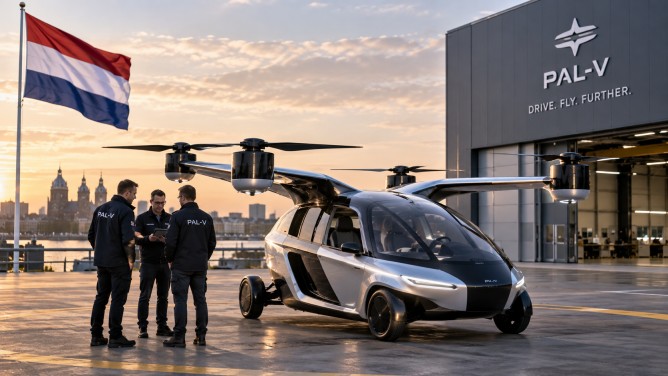
PAL-V, a Dutch company, has achieved a significant milestone by obtaining approval from the European Union Aviation Safety Agency (EASA) to start manufacturing aviation components for its innovative Liberty flying car. This development brings the company closer to putting its flying vehicle into commercial operation. The approval specifically allows PAL-V to produce the aircraft-related parts of the Liberty, a three-wheeled vehicle that blends road and air travel capabilities.
The next crucial step for PAL-V is to secure certification for the entire Liberty vehicle as an aircraft, a process expected to be completed by 2028. Once certified, this would enable the Liberty to legally operate in the skies. The unique design of the Liberty allows it to function as a conventional car on the road, while its rotor and propeller can be deployed for flight. However, unlike helicopters, the Liberty cannot take off vertically and requires a runway for both takeoff and landing operations.
Operating the Liberty necessitates both a driving license and a pilot’s license. The vehicle is capable of reaching a road speed of around 160 km/h and offers a flying range of approximately 500 km. These features make it a versatile option for those looking to combine road and air travel in a single vehicle.
The starting price for the Liberty is approximately €299,000, excluding taxes and additional costs. PAL-V reports strong demand for the vehicle, with the first 250 units already sold. Notably, the Dutch fire brigade is among the early customers. If the final aviation certification is secured as planned, PAL-V aims to have its flying cars operational in the skies by 2028, marking a significant leap in personal transportation technology.