
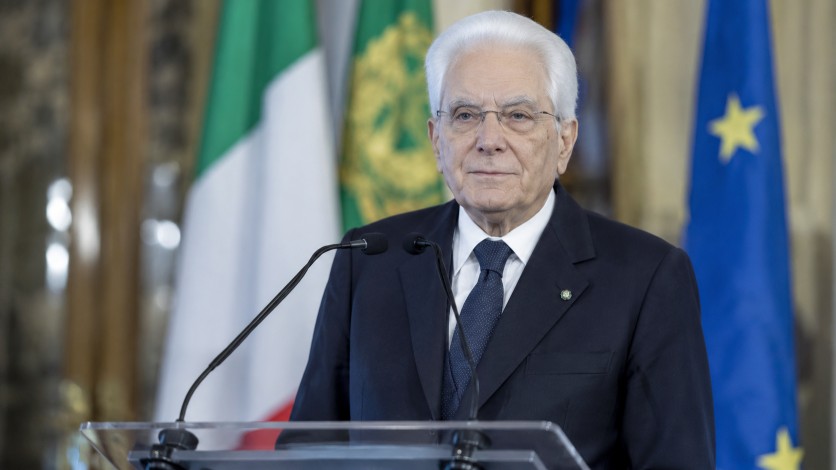
In a recent meeting, Italian President Sergio Mattarella reiterated the constitutional stipulation that only the President holds the authority to grant pardons. This clarification was made during discussions with Justice Minister Carlo Nordio, following a controversial move by the justice ministry to initiate pardon proceedings for Mario Roggero. Roggero, a jeweler aged 72, faces a final sentence of 14 years and nine months in prison for the fatal shooting of two robbers and injuring another who were fleeing after a robbery at his shop in 2021.
The Supreme Court of Italy has recently upheld Roggero’s sentence, cementing the legal outcome. Despite this, the justice ministry’s actions to start the pardon process have fueled debates across the public and political spheres. President Mattarella’s meeting with Minister Nordio aimed to reaffirm the constitutional mandate that the power to pardon is exclusively the President’s, a position supported by a 2006 Constitutional Court ruling.
This legal and political controversy has attracted significant attention, as several lawmakers and senior officials from the ruling coalition have voiced their opinions. They advocate for exploring all possible legal avenues in light of the situation, reflecting the broader societal debate surrounding the case. The incident has thus highlighted the tension between public sentiment and constitutional law, underscoring the complexities of the justice system in high-profile cases.
President Mattarella’s intervention underscores the importance of adhering to constitutional processes, emphasizing the non-negotiable nature of presidential powers in matters of pardons. This comes as a reminder of the constitutional framework that governs such decisions, reinforcing the separation of powers within the Italian government. As the debate continues, the case of Mario Roggero remains a focal point of national discussion, illustrating the intricate balance between justice and executive authority.