
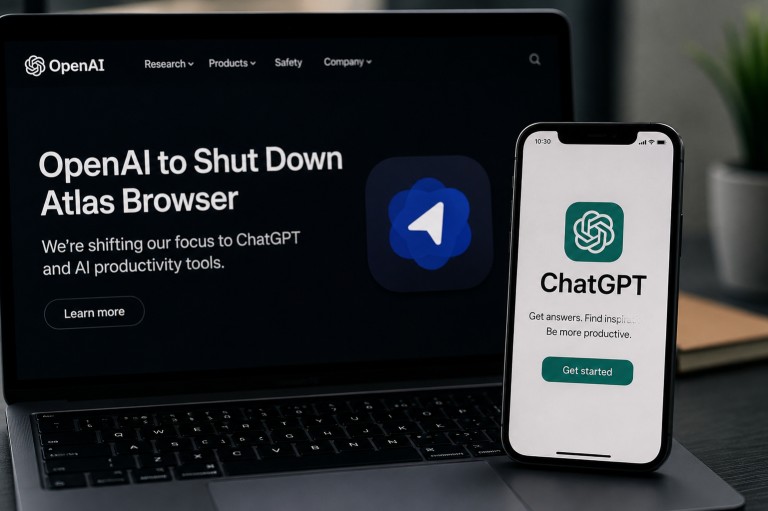
OpenAI is set to discontinue its AI-driven web browser, Atlas, with the service scheduled to cease operations on August 9. The company has decided to redirect its efforts towards integrating the fundamental browsing and automation features of Atlas into ChatGPT and other AI productivity tools. This strategic shift underscores OpenAI’s commitment to enhancing its core AI products by embedding advanced functionalities within widely used applications rather than maintaining a separate browser.
The insights gathered from the development and use of Atlas have significantly influenced OpenAI’s approach to AI-assisted browsing. Many of its pioneering capabilities are now being incorporated into the ChatGPT app. In line with this, OpenAI has launched a ChatGPT extension for Google Chrome, allowing users to analyze webpage content, generate summaries, provide contextual information, and assist with more complex automated tasks. This move indicates a shift in focus towards workplace productivity and the development of AI agents, as opposed to sustaining a standalone browser.
This decision arrives at a time when Google Chrome continues to dominate the browser market, thanks in part to its integration of AI technologies like Gemini. Chrome has steadily enhanced its AI-assisted browsing and search features, reinforcing its market position without necessitating users to switch to a separate AI browser. This strategic advantage highlights the competitive landscape that OpenAI faces as it pivots to embed AI functionalities within existing platforms.
OpenAI’s choice to discontinue Atlas reflects a broader strategy aimed at prioritizing its core AI offerings and services. By focusing on embedding AI features into popular applications, OpenAI hopes to better compete with established platforms, enhancing user productivity and experience through AI-driven innovations. This approach aligns with the company’s vision of leveraging AI to transform how users interact with technology in everyday scenarios.